

When a Child Flies Overseas Without a Parent: What to Check Before Booking
Whether your child is flying with a relative or travelling alone, check the documents and airline arrangements for the actual journey before choosing a fare.
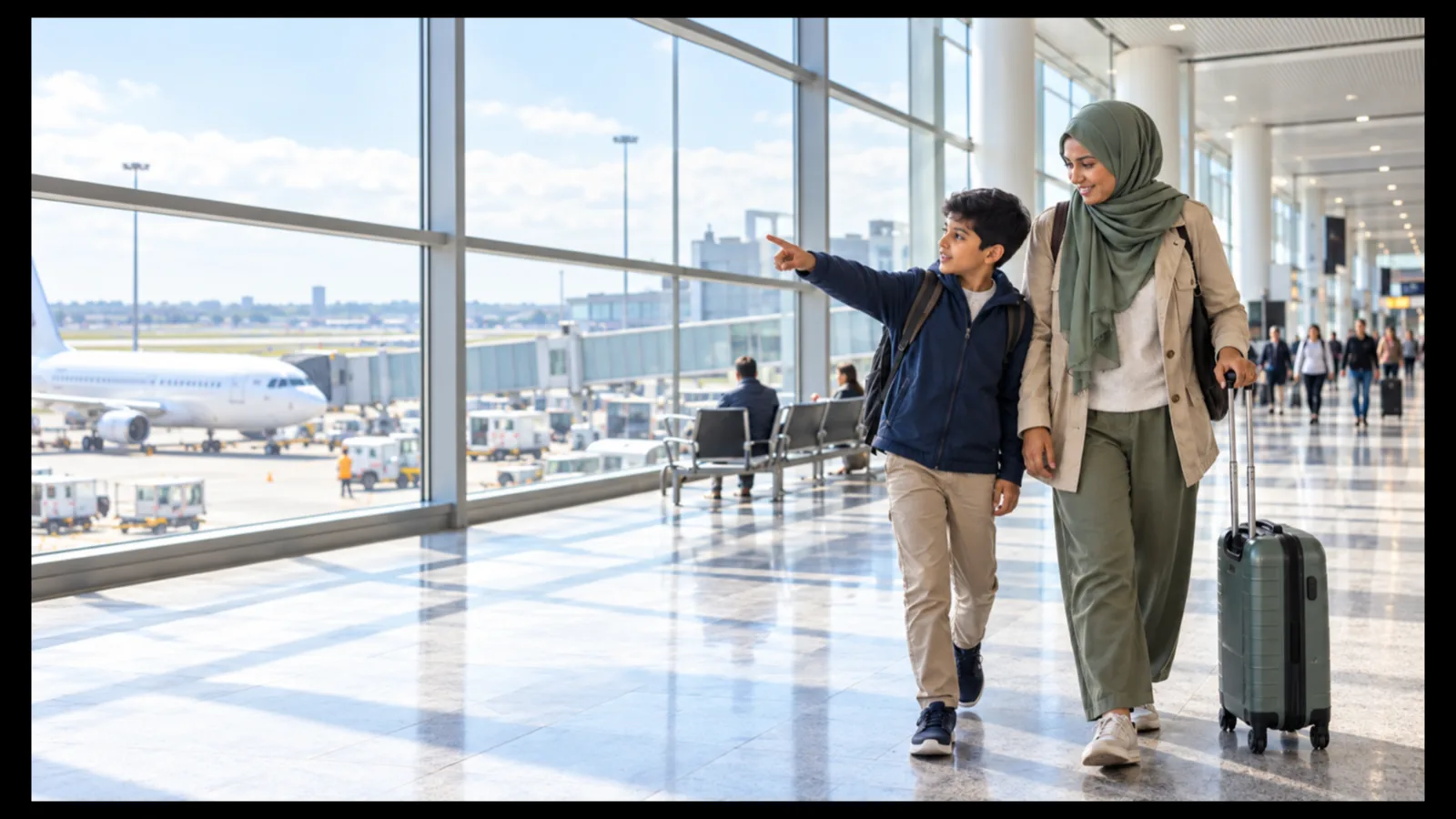
Your child may be flying with an aunt, uncle, grandparent or family friend. They may be old enough to fly on their own. Either way, the parents are not on the flight, and it is worth settling the document questions before the tickets are bought.
There is no single form that works for every child or every route. The answer depends on the child's age, passport and citizenship, who has parental responsibility, the airline operating each flight, and the countries the child will enter, leave or transit. This guide gives families a way to ask the right questions. The airline and government authorities must confirm the requirements for the actual journey.
First, which kind of journey is it?
Travelling with another adult: The child is on the flight with someone who is not a parent, such as a relative or family friend. That adult's relationship to the child does not, by itself, show that they have legal authority to approve international travel. Check who holds parental responsibility, whether consent is needed, and what proof of the relationship or authority the airline and border authorities expect.
Travelling alone: The child will not have an adult travelling with them on the same flight. Ask the operating airline whether it accepts a child of that age, whether an unaccompanied-minor service is compulsory or optional, who must bring the child to check-in and collect them on arrival, and whether every connection is permitted. These are airline arrangements in addition to, not a replacement for, passport, visa and consent checks.
The distinction matters. For example, Singapore Airlines' current unaccompanied-minor policy defines its service by whether an adult is travelling on the same flight and in the same class. Its age bands, forms and connection conditions are specific to that airline. Do not copy them onto another carrier. Smartraveller also tells families to contact their airline because airline rules vary.
Check consent and parental responsibility
If the child is leaving Australia, Smartraveller's child-travel advice says to get consent from everyone who has parental responsibility for them, or obtain the relevant court order. A child travelling alone or with an adult who is not their parent or legal guardian may need a consent letter. Do not assume that a grandparent, an older sibling or a family friend can give consent simply because they are accompanying the child.
Ask the airline and the destination's embassy or immigration authority what the letter should contain and how it must be signed. Smartraveller says a letter usually identifies the child, their passport, the person they are travelling with and where they are going; it advises having the parents sign it and a public official witness it. The exact format, signatories, certification and translation requirements can differ. A template found online is not proof that a border will accept it.
Depending on the child's circumstances, the family may also need a birth certificate, identity documents for the people giving consent, guardianship evidence, adoption papers or court orders. If parental responsibility is disputed or an order restricts travel, seek individual legal advice before booking.
Check passports, visas and the return trip
For these overseas routes, each traveller, including a child, will generally need their own valid passport or another travel document accepted along the whole route. Check the child's and any accompanying adult's documents against the rules for the destination, transit points and return journey. Smartraveller's passport guidance explains the Australian passport position, including for Australian citizens who also hold another nationality. Visa and exit rules depend on the passport and status actually used, not simply the family's heritage.
Write down the whole route, including the operating airline for each sector and any country where the child changes flights. Ask the relevant authorities about entry, transit and exit. A document accepted on the outbound flight may not settle the return journey.
If a child is coming to Australia from overseas, check their own right to enter Australia. For some under-18 visa applications, a non-travelling person with parental responsibility may need to provide Home Affairs Form 1229 or another accepted declaration. Form 1229 concerns consent for an Australian visa application; it is not a universal permission letter for a child to fly. It does not apply to every visa pathway.
What changes by country?
The checklist above is broadly useful; the answers are country-specific. Start with the child's citizenship and passport, then the named destination and transit countries. For the routes many families ask us about:
- India: An Australian-passport holder needs the appropriate Indian visa; a holder of an Overseas Citizen of India (OCI) card has separate entry rules. An Indian-passport holder has a different position. Smartraveller's India advice directs travellers to Indian authorities for current entry and exit rules. Confirm any child-consent or relationship evidence for the actual trip with the Indian mission and airline.
- Pakistan: Smartraveller's Pakistan advice says local immigration may ask for child-travel consent or proof of parental responsibility when a child travels unaccompanied or with only one parent or guardian, particularly if the child is of Pakistani origin. It also flags separate passport, visa and exit-document checks. Ask the Pakistani mission what applies to the child's status.
- Bangladesh: Smartraveller's Bangladesh advice notes that Bangladesh may consider a person a Bangladeshi citizen if they or their parents are of Bangladeshi origin, even if born overseas and never holding a Bangladeshi passport. Check the child's citizenship, passport, visa or other entry arrangement, and minor-travel requirements with the Bangladesh High Commission in Canberra.
- Nepal: Confirm the child's entry and exit position with the Nepal Department of Immigration. Its general visa page does not establish a universal consent rule for a child travelling with another adult or alone. Ask that question for the actual passport and route.
- African destinations: There is no single “Africa” rule. South Africa's current guidance, for example, says children travelling on valid passports with one or both parents generally no longer need a birth certificate or parental consent letter, while different documents may still be required when a child travels with another adult, alone, under legal guardianship, or as a dual national using a South African passport. Check the South African Government's child-travel requirements for that situation. For a Kenya, Nigeria or other route, check that country's immigration authority and every transit point separately.
These are starting points, not country-by-country clearance certificates. Rules can change, and the child's nationality and family circumstances may change the answer.
Before you choose a fare
Have the passports, child's age, accompanying adult's details if relevant, proposed dates and full itinerary ready. Then confirm:
- Who can authorise this child's international travel, and which consent or court documents are needed?
- Will the child travel with another adult or alone, and what does each operating airline require for that arrangement and every connection?
- What are the child's entry, transit and exit requirements for every country on the route?
- What documents will the child need to enter or return to Australia?
Once those answers are clear, compare flights that suit both the family and the document requirements. Everyday Travel can help plan the itinerary and identify the airline and route checks to make. Call 1300 629 507, WhatsApp +61 493 235 226, or visit everydaytravel.net.au. The final document requirements must come from the operating airline and the relevant government authorities.